A table across time
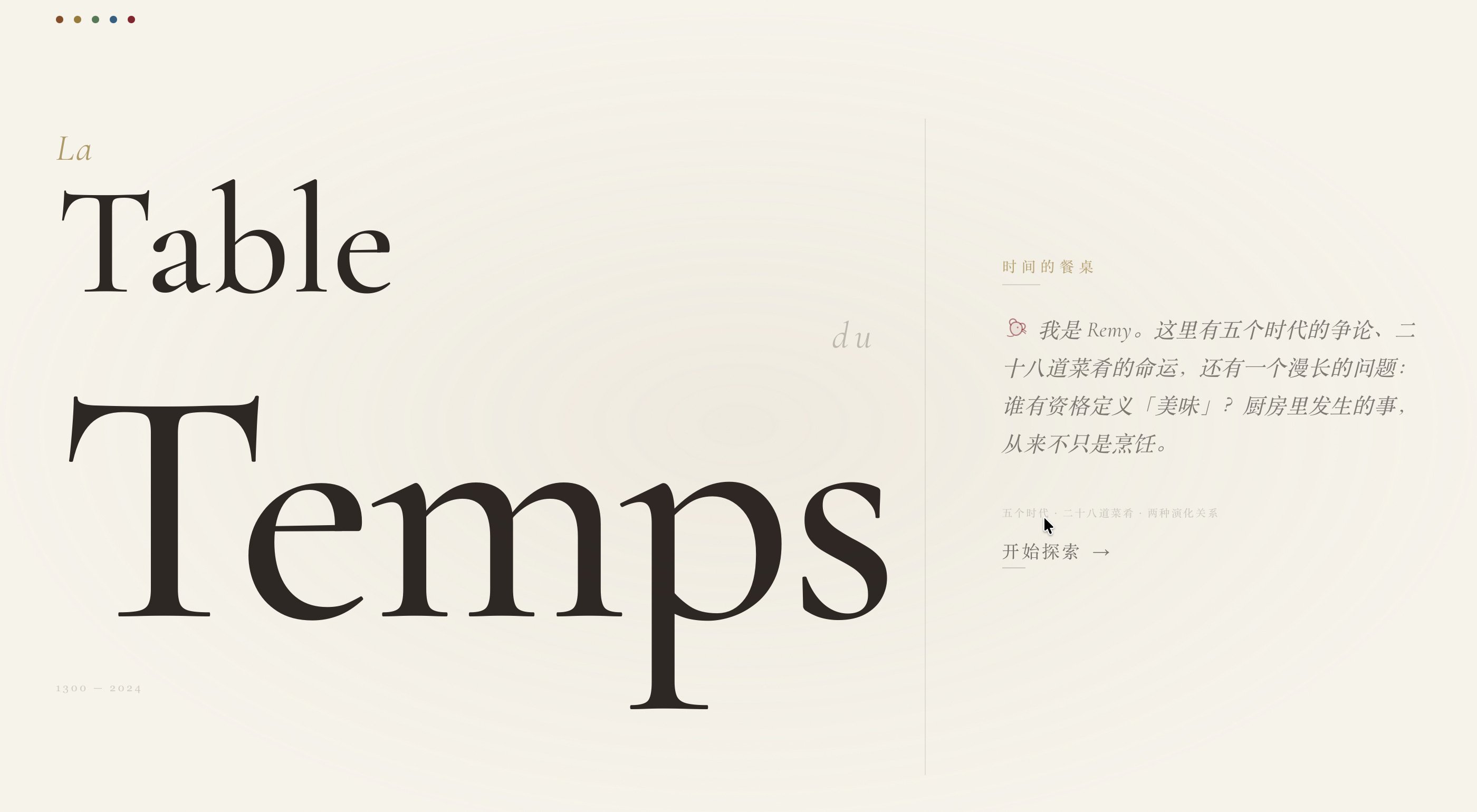
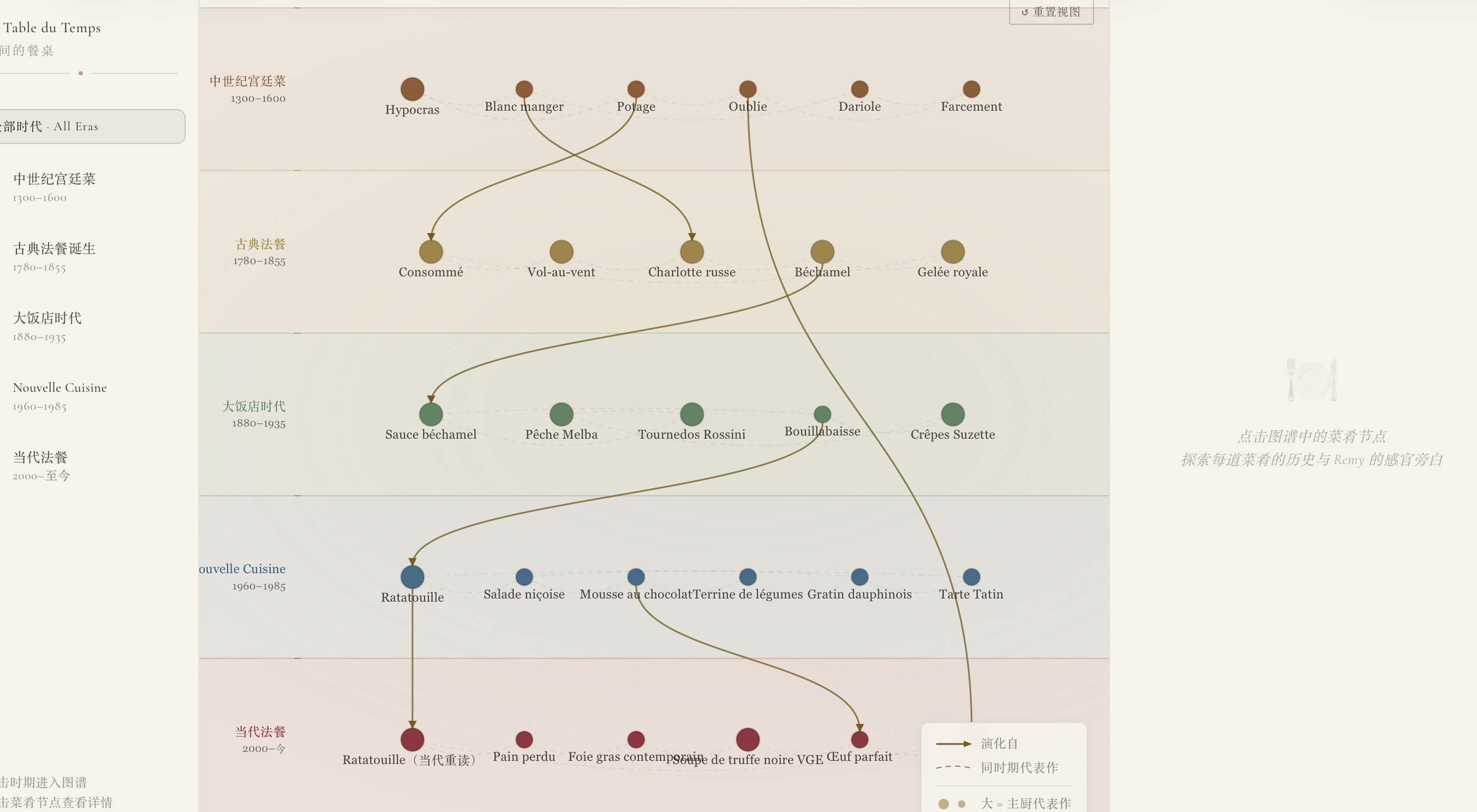
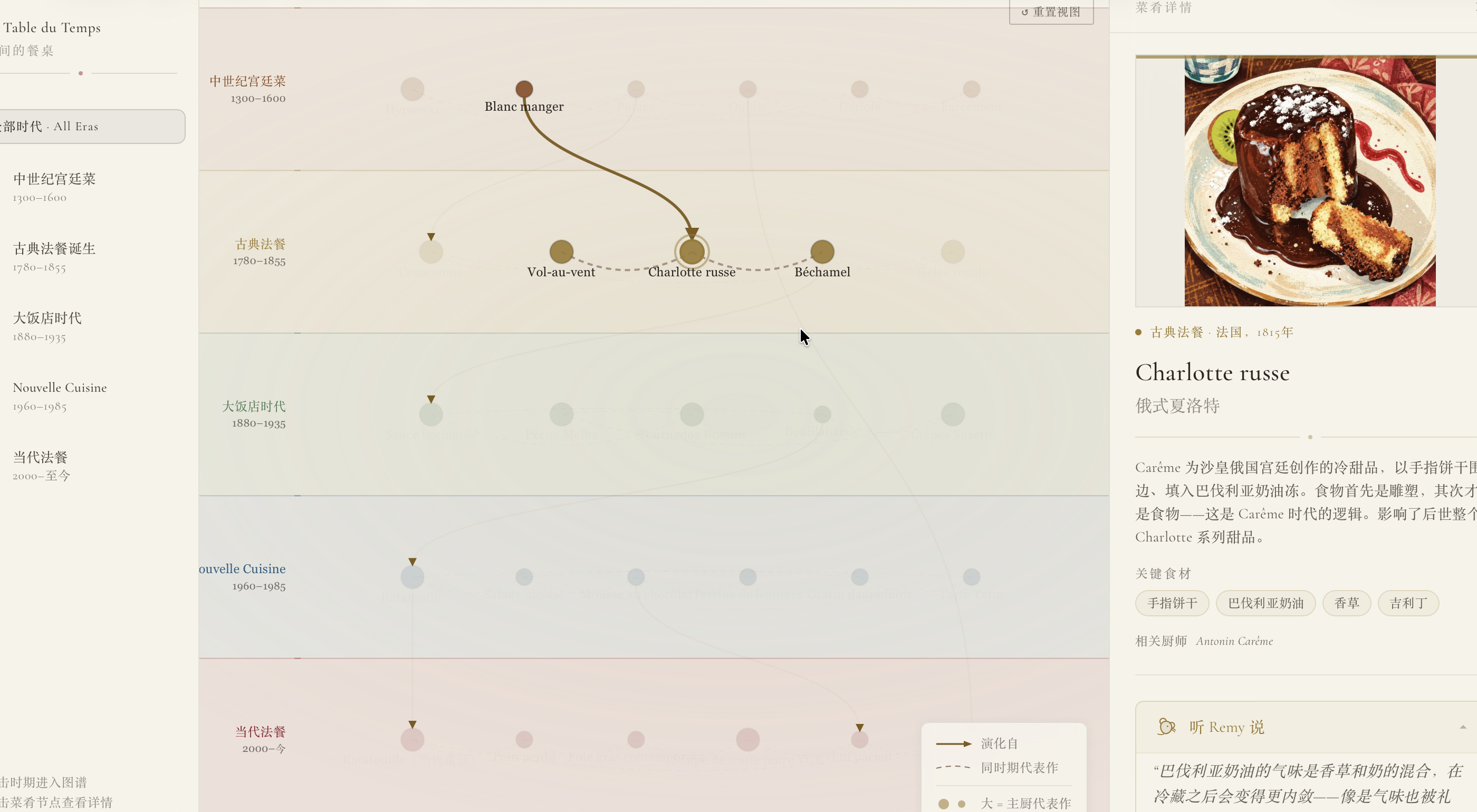
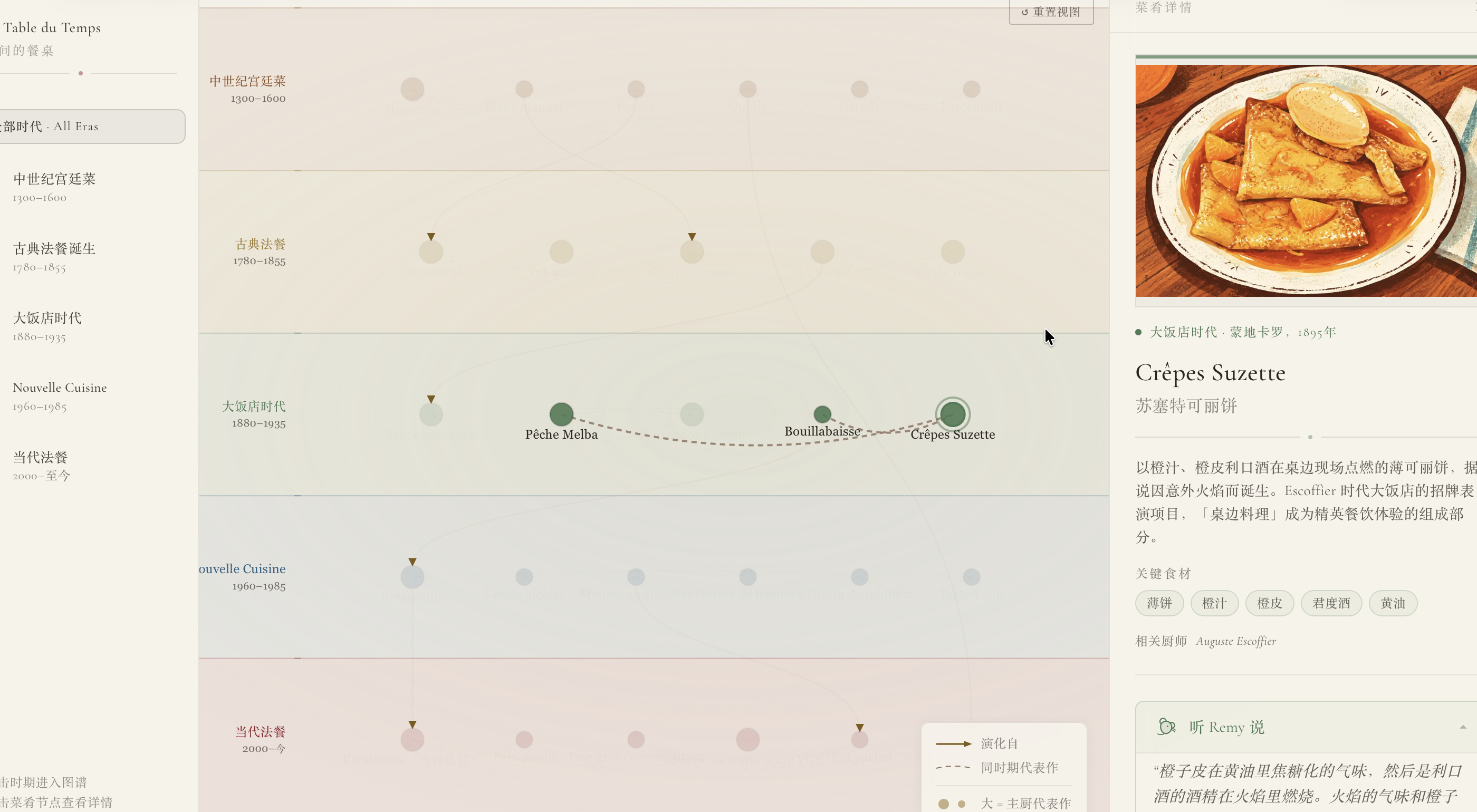
La Table du Temps is a creative web prototype that turns French culinary history into an explorable relationship map. It connects 5 historical eras, 28 dishes, local imagery, and two kinds of cultural relationships: direct evolution and same-era association. Rather than presenting dish history as static encyclopedia text, it frames changes in taste, class, technique, and memory as a journey.
My role
- Designed the product concept, narrative structure, and interaction model for a cultural data-visualization interface.
- Built the Next.js and TypeScript frontend, including the landing page, exploration route, era timeline, graph canvas, dish detail panel, and relationship popup.
- Structured eras, dishes, and historical relationships with local image references and fallback behaviour.
- Created a Python collection pipeline for Wikidata and Wikipedia enrichment, with manual review points for historical and narrative accuracy.
- Used AI coding assistance as workflow support while retaining ownership of product direction, source selection, interaction decisions, and implementation review.
How it works
Move through culinary eras
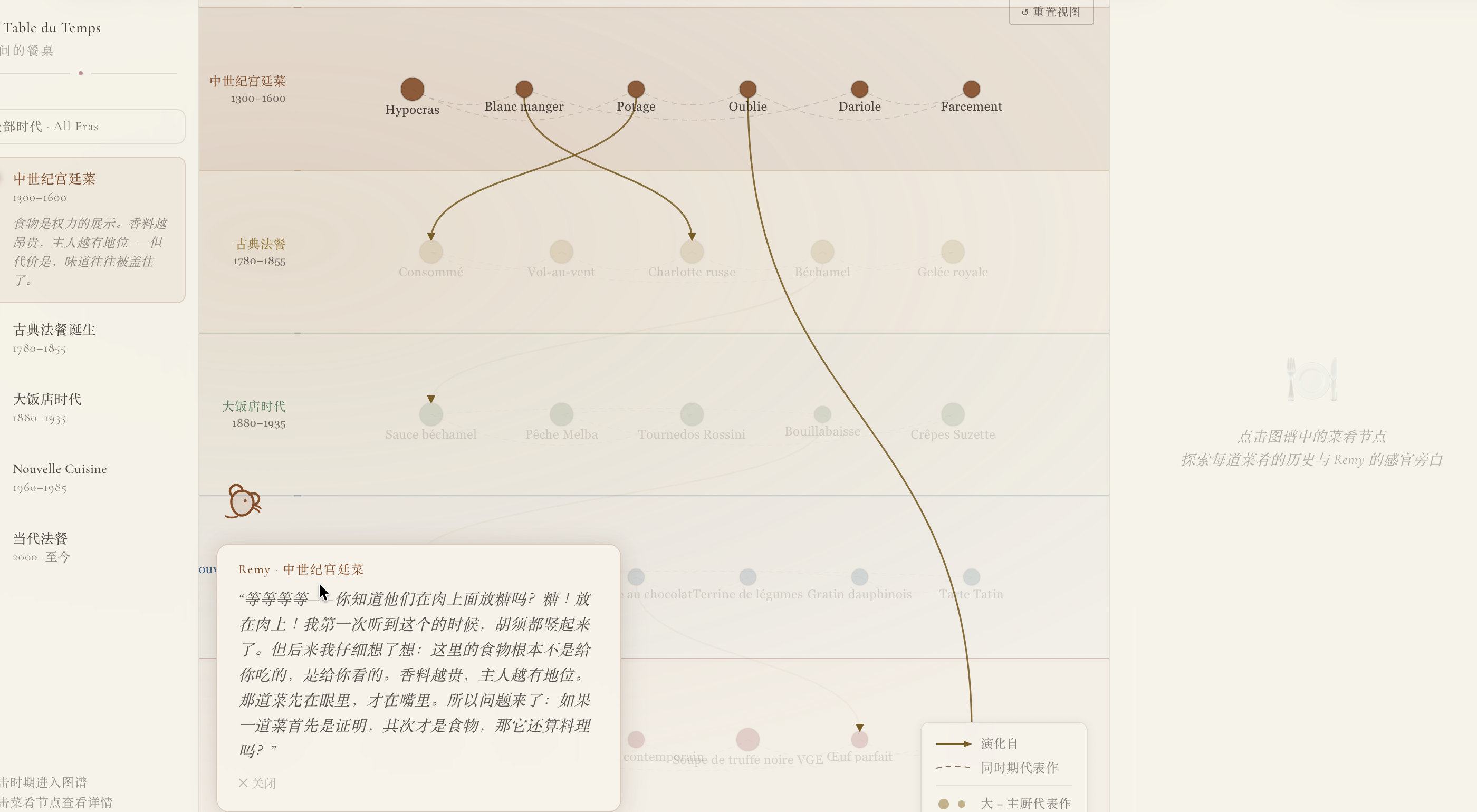
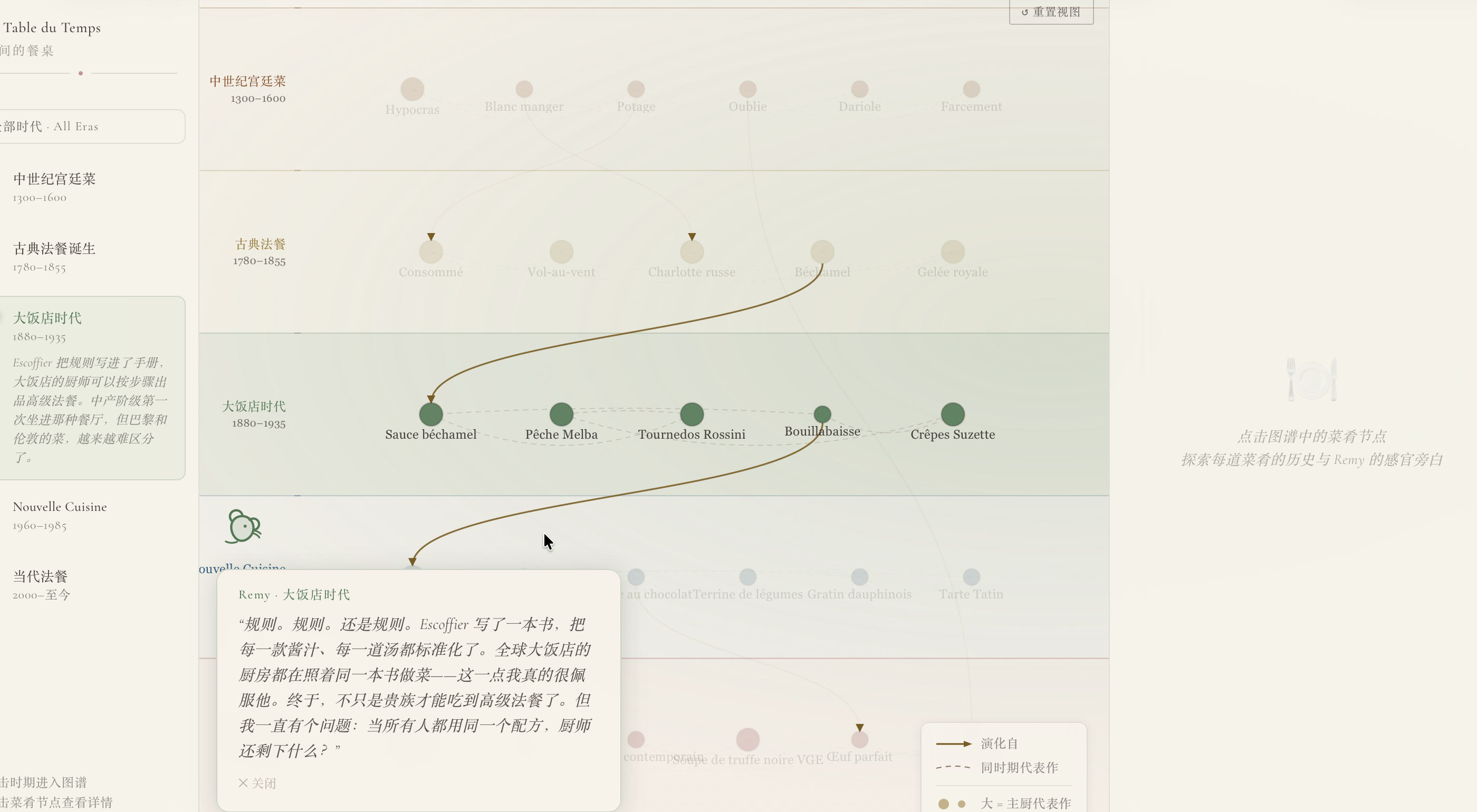
The era timeline navigates medieval court cuisine, classical French cuisine, the grand hotel era, Nouvelle Cuisine, and contemporary French dining. Each selection changes the historical lens and opens a Remy-inspired narrative note.
Explore relationships, not a list
A D3 graph renders dishes as a historical map with zoom, pan, node selection, hover highlighting, and relationship discovery. Clicking a connection explains whether it represents direct evolution or a same-era cultural pairing.
Read history through a dish
Each dish panel combines French and Chinese names, origin, history, key ingredients, chef attribution when available, and local imagery. A second sensory narration layer reinterprets the same record through smell, texture, and memory.
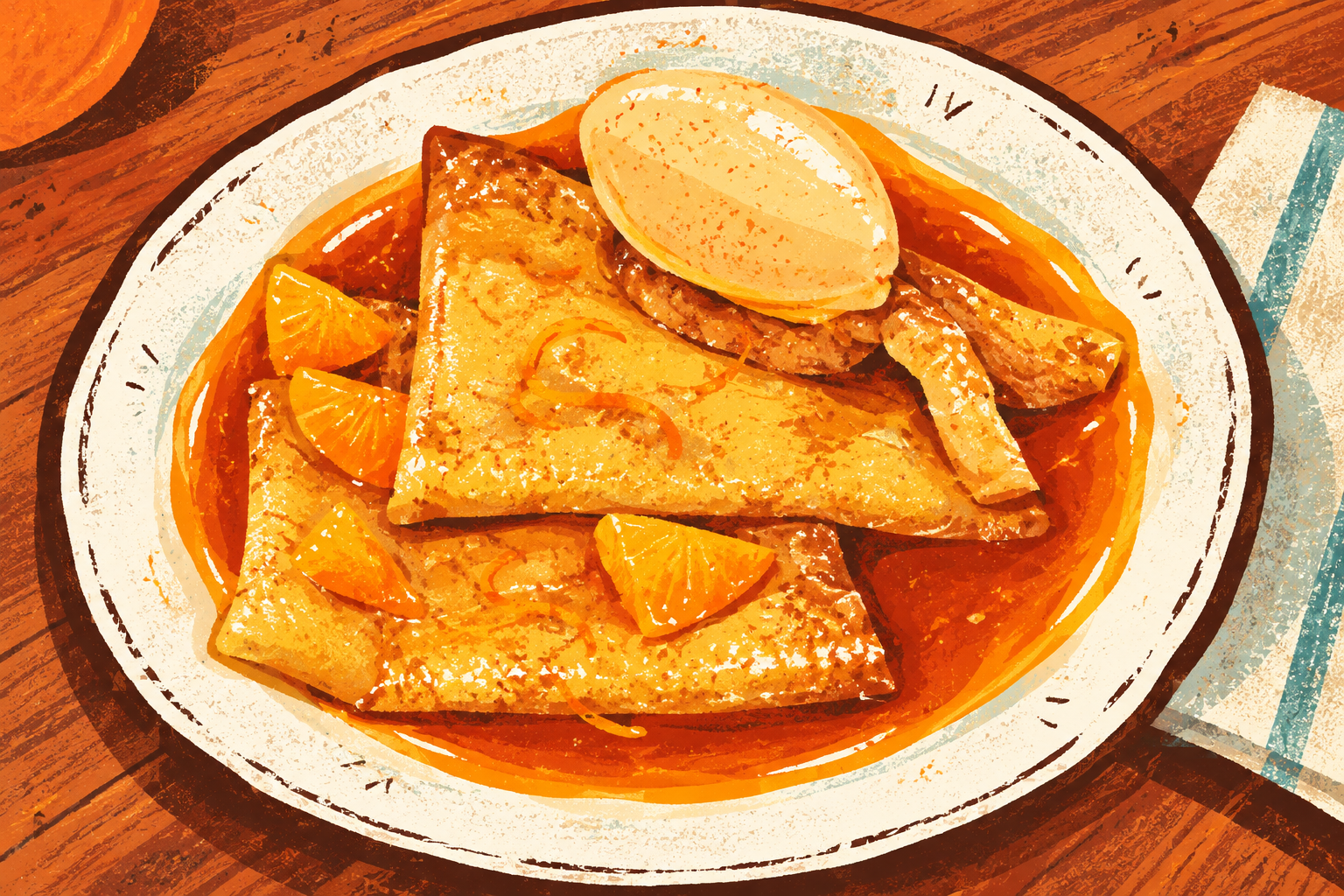
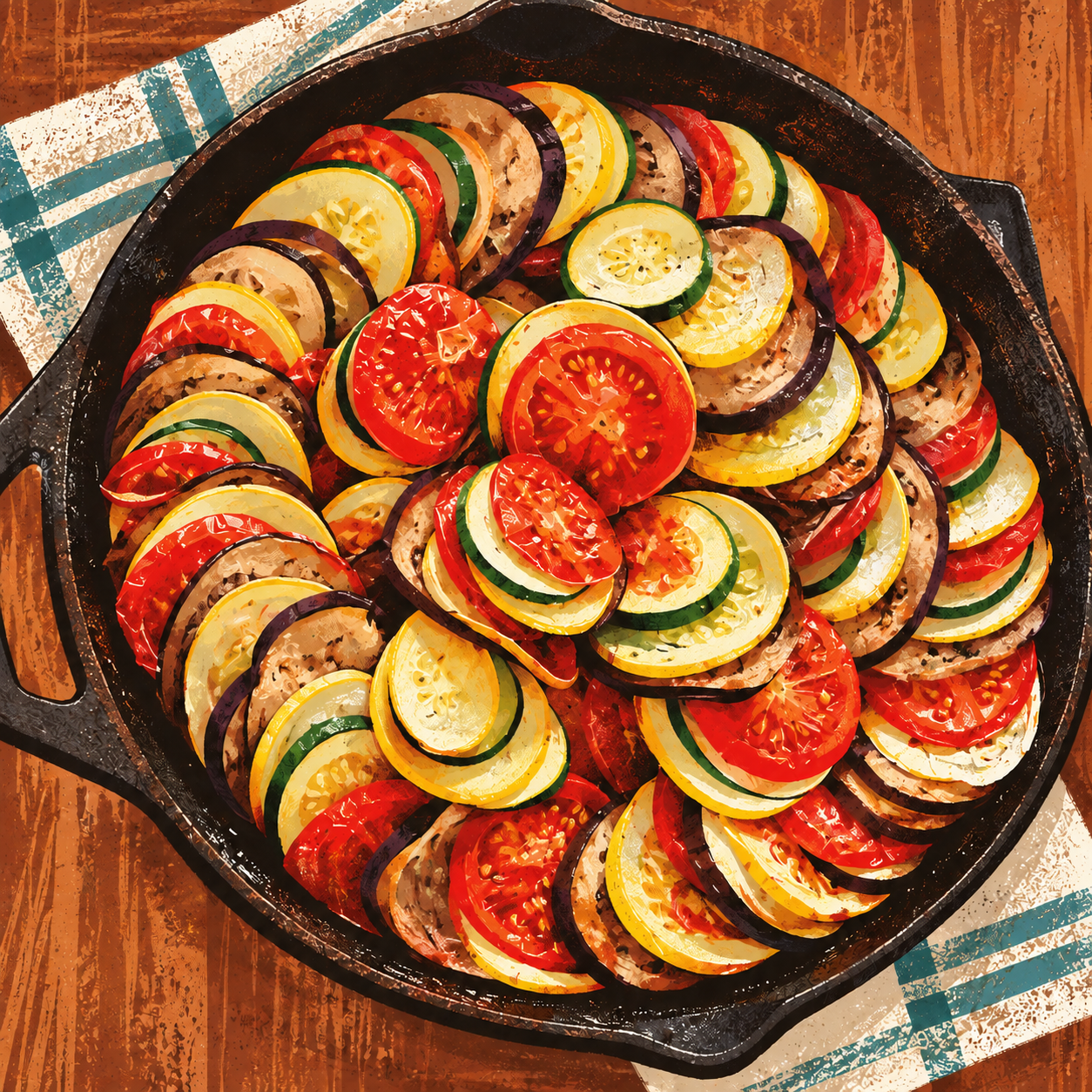
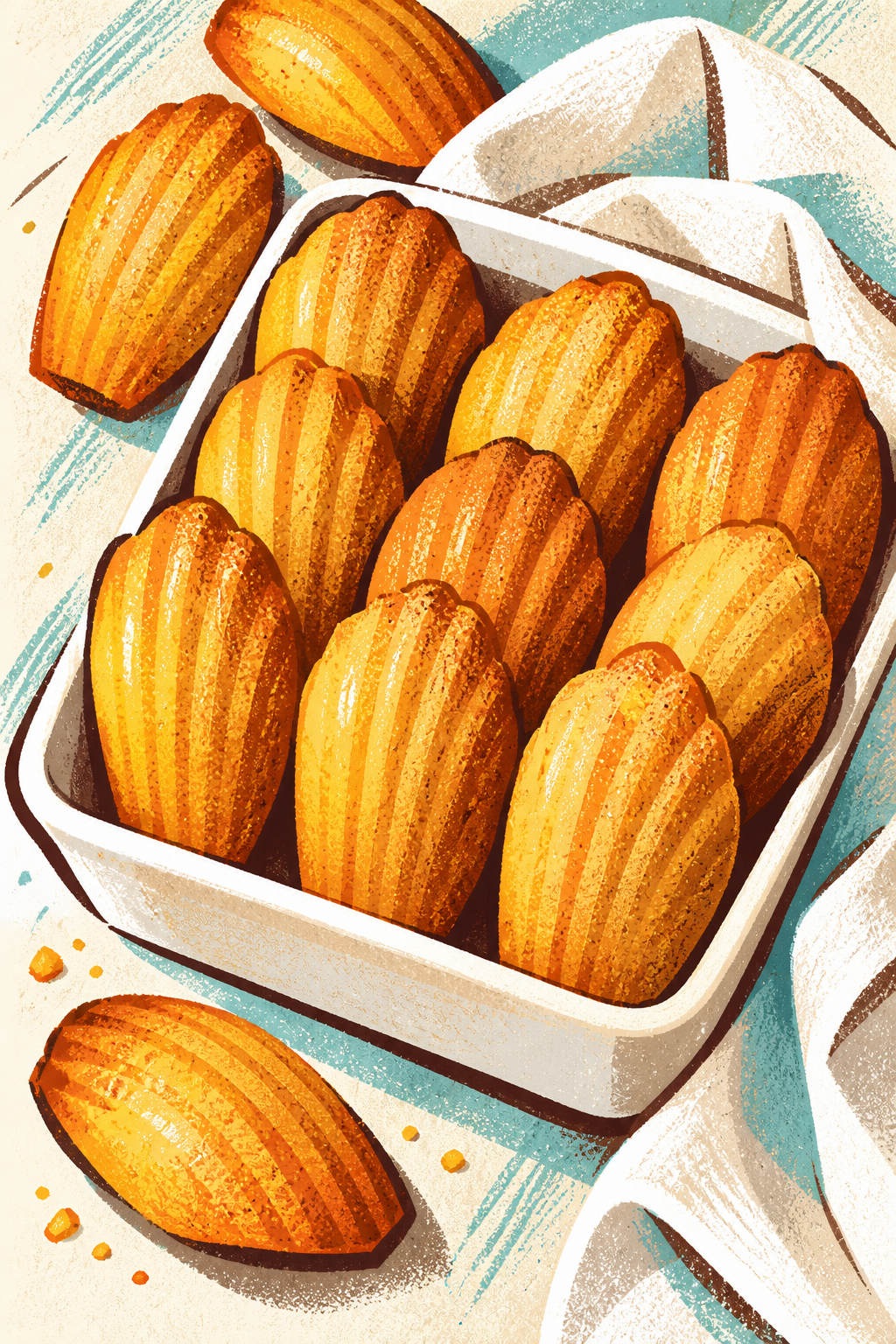
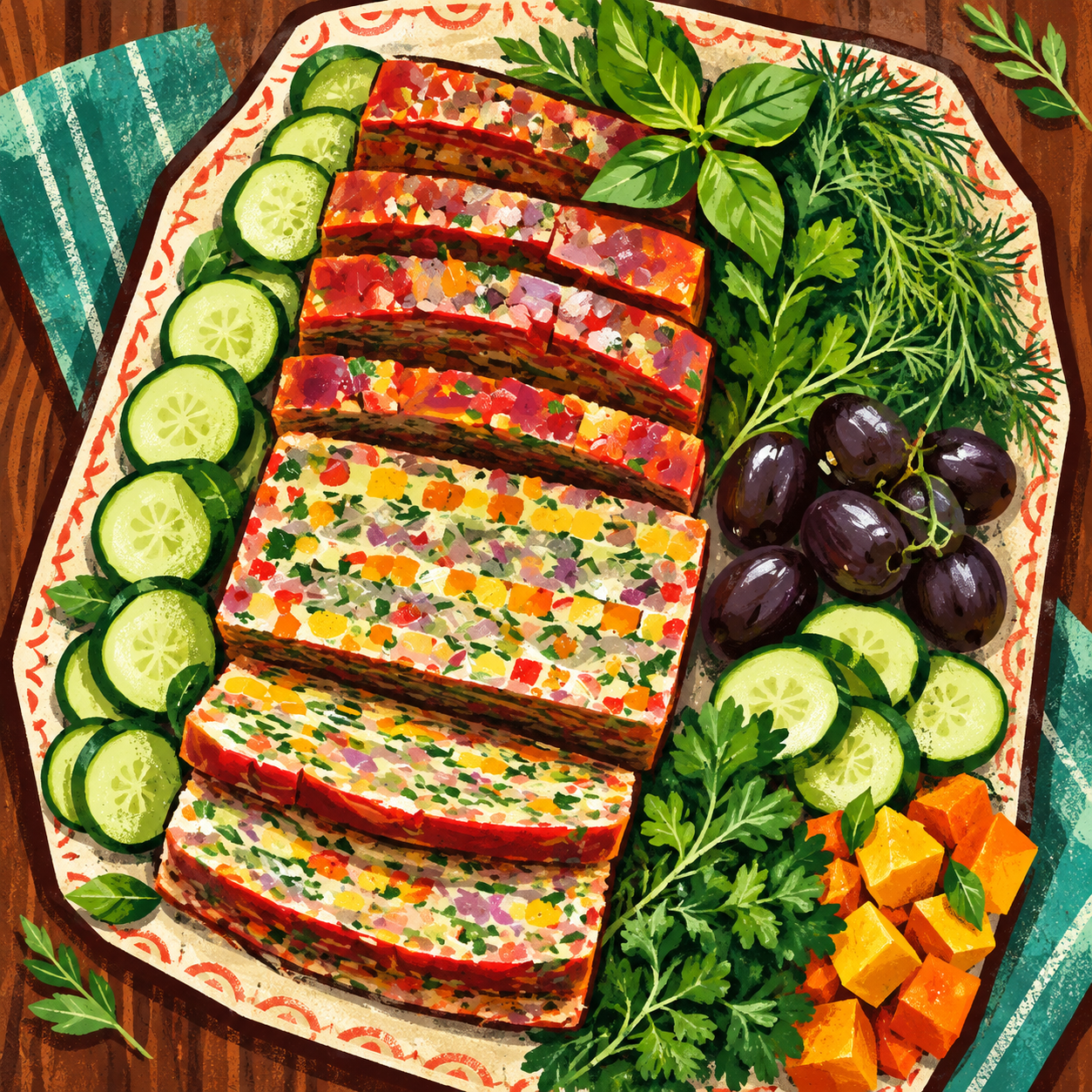
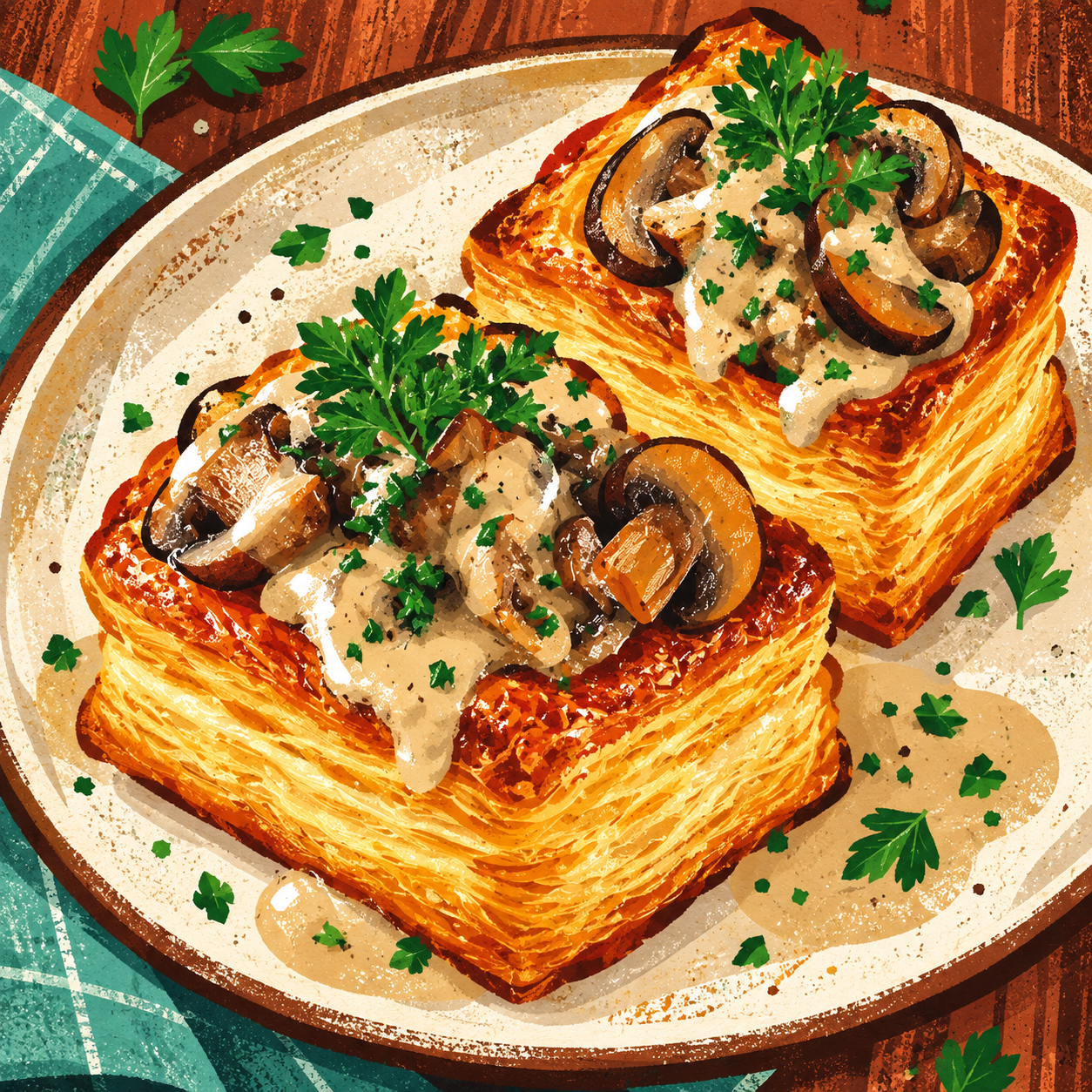
Selected dish artwork
Sources and structure
The project separates eras, dishes, and relationship edges into three data files. Wikidata and Wikipedia provide structured enrichment and cross-checking, while manual review guides historically sensitive interpretation and narrative placement. Some era assignments follow the role a dish plays in the story rather than a strict date of invention. Local-first assets keep the core experience independent of remote image loading.